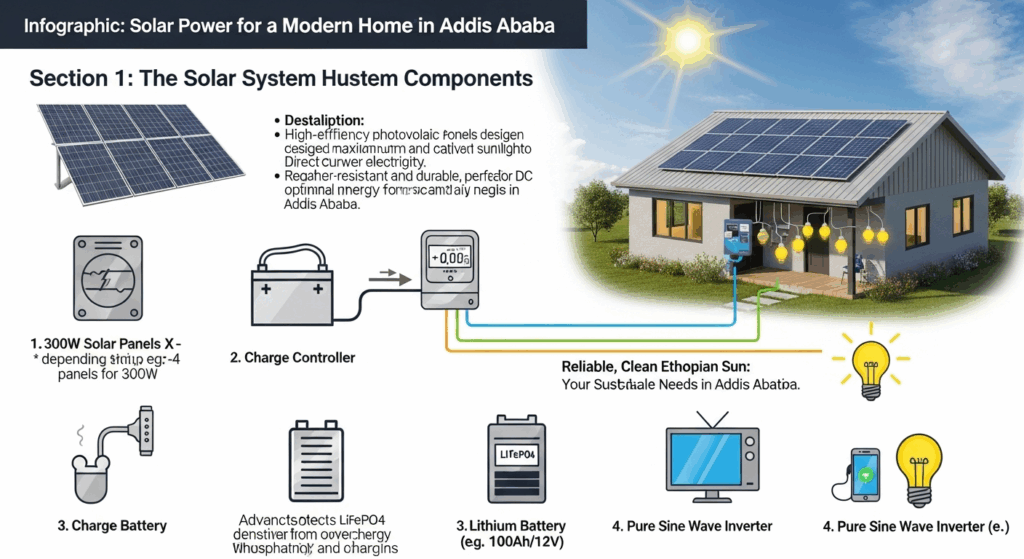

A Solar Home System (SHS) uses solar panels, a battery, and an inverter. It gives light and power where the national grid is not available. The solar home system Ethiopia price matters for both villages and cities. Rural families care about low price and subsidy. The solar system cost in Ethiopia depends on battery size, inverter quality, and panel wattage.
What Does a Solar Home System Include? Components & Types
Key Components of an SHS
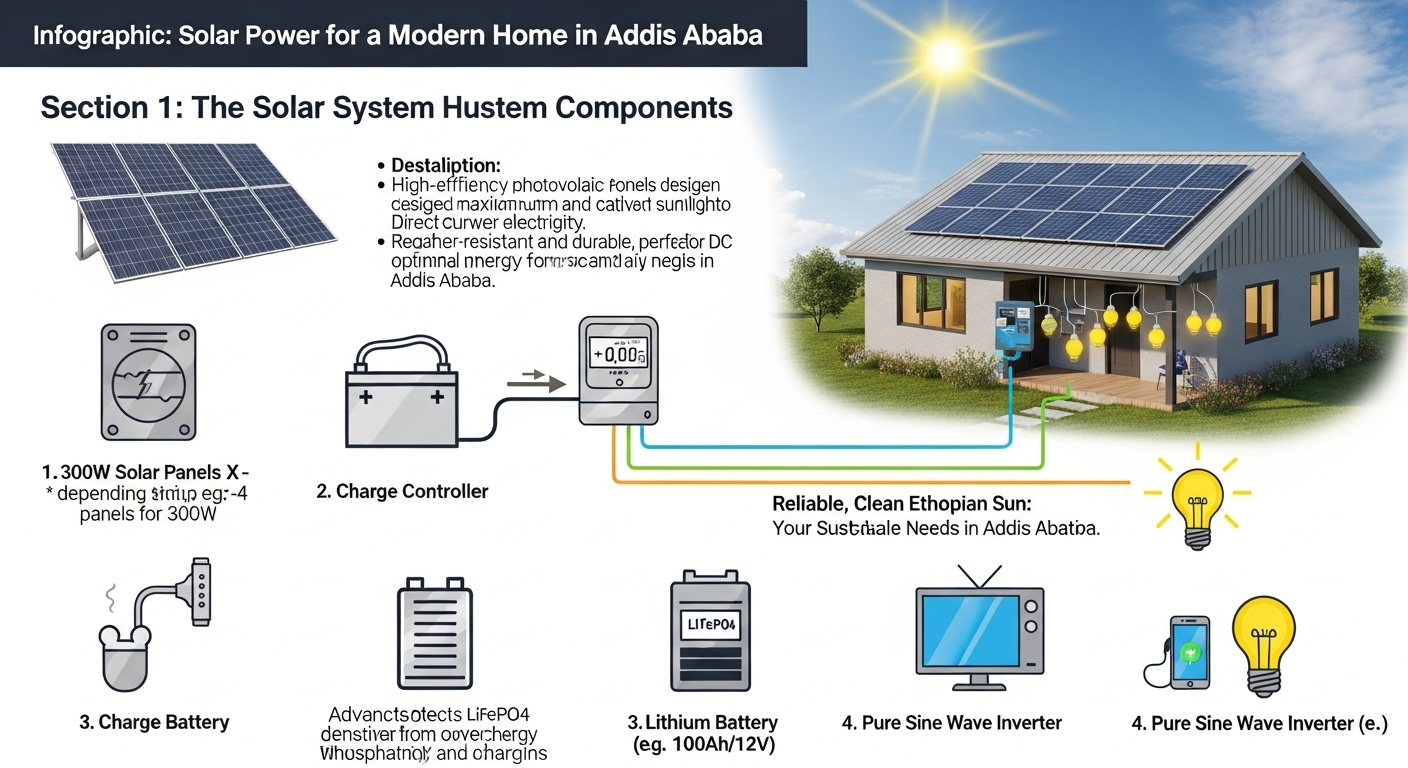
A solar panel (PV module) collects sunlight and turns it into electricity. Panel quality depends on type, with monocrystalline giving higher efficiency than polycrystalline. Panels usually last 20–25 years. The battery stores electricity for night use. Lead-acid batteries are cheaper but have shorter life. Lithium batteries last longer and charge faster, but they increase cost.
The inverter changes DC power from the panel into AC power for appliances. Pure sine wave inverters give stable supply, while hybrid inverters can mix grid and solar input. The charge controller protects the battery from overcharging and deep discharge. This improves battery life and system safety.
Types and Sizes of Systems
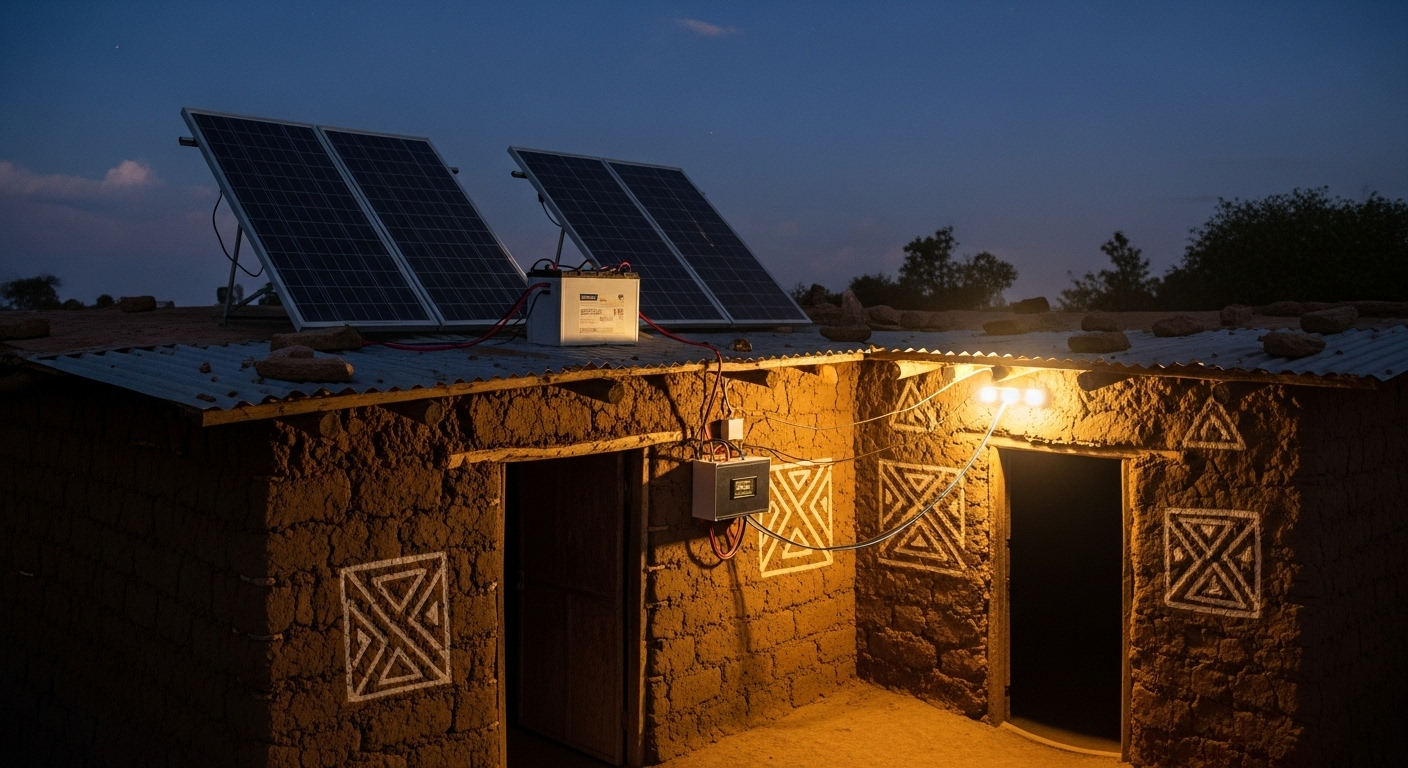
Small systems from 10–50W are used for lighting and phone charging. The 50W solar home system Ethiopia price is suitable for households with basic needs. Medium systems around 100–300W can run lights, a TV, and small appliances. A 100W solar home system price Ethiopia or 200W off-grid system cost is popular in towns.
Large systems of 1000W+ (1kW) are for full homes or small businesses. A 1kW off-grid home system cost in Ethiopia supports fridges, computers, and more. Use cases range from simple lighting to powering productive tools like sewing machines, water pumps, or shop equipment.
Current Price Range of Solar Home Systems in Ethiopia
Price by Wattage / Size
A 40–70W solar home system is the cheapest option, often used for lights and charging. The solar home system 100W price Ethiopia gives more flexibility for TVs and radios. A 200W off-grid system cost is higher but supports several appliances. A full house solar system price Ethiopia with 1kW or more is the most expensive, often for large families or business use.
Price by Quality / Brand / Battery Type
Price depends on panel type, battery type, and brand. Mono panels cost more than poly panels because of higher efficiency. A lithium battery solar system price Ethiopia is higher than a lead-acid setup, but it lasts longer. Cheap systems may use low-quality parts and short warranty. A premium solar home system Ethiopia gives better performance and longer life.
Price by Region / Location & Installation Cost
In Addis Ababa, prices are lower. Products are easier to find and transport costs are less. In rural areas, systems cost more. Extra fees come from long transport, poor roads, and fewer dealers. Installation cost includes wiring, mounting, and labor. Some buyers also pay local taxes or permit fees.
Factors that Influence the Cost (Price Drivers)
Import Duties, Taxes, and Government Policies
Most parts come from outside Ethiopia. Import duties, VAT, and tariffs raise the final solar home system Ethiopia price. Government programs can reduce cost. When subsidies exist, more rural homes can buy solar.
Currency Fluctuations, Exchange Rate, Inflation
The Ethiopian Birr often changes value. When it weakens, the solar system cost in Ethiopia increases. Inflation also pushes up transport, labor, and parts. Families end up paying more each year.
Transportation, Logistics & Installation Constraints
Reaching remote towns adds cost. Poor roads and long trips increase transport fees. Shipping delays and customs checks add more charges. These get passed on to the buyer.
Quality, Warranty, After-Sales Service
Low-price systems may use weak panels or short-life batteries. They fail quickly and leave no support. A higher solar home system Ethiopia price often means good quality, longer warranty, and trusted service. Local assembly can reduce price, but it depends on supplier reliability.
Solar Prices in Ethiopia
| Item | Price (ETB) | Notes |
|---|---|---|
| 100W Solar Panel (mono, basic) | ~ 5,850 ETB | Panel only; no battery, inverter etc. |
| D.Light Solar Home System D100 | ~ 12,500 ETB | Lighting system with several LEDs etc. |
| Portable / lantern kit (basic LED + charger) | ~ 10,000 ETB | Entry-level lighting & phone charging kit. |
| Larger solar panel (350W – 550W) | ~ 42,000 ETB | For more serious power needs. |
| “5 kW Solar Power Station” (full off-grid setup) | Price on inquiry | Includes panels, batteries, inverter etc. Big investment. |
Financing Options & Affordability in Ethiopia
Many families use Pay-As-You-Go (PAYGO). They pay small amounts each week or month until they own the system. Microfinance groups give loans for solar. Government programs and subsidies reduce the solar home system Ethiopia price for poor households. Some companies lower cost with local assembly. Flexible payment plans make solar easier to buy.
Solar Home System vs Alternatives: Cost Comparison
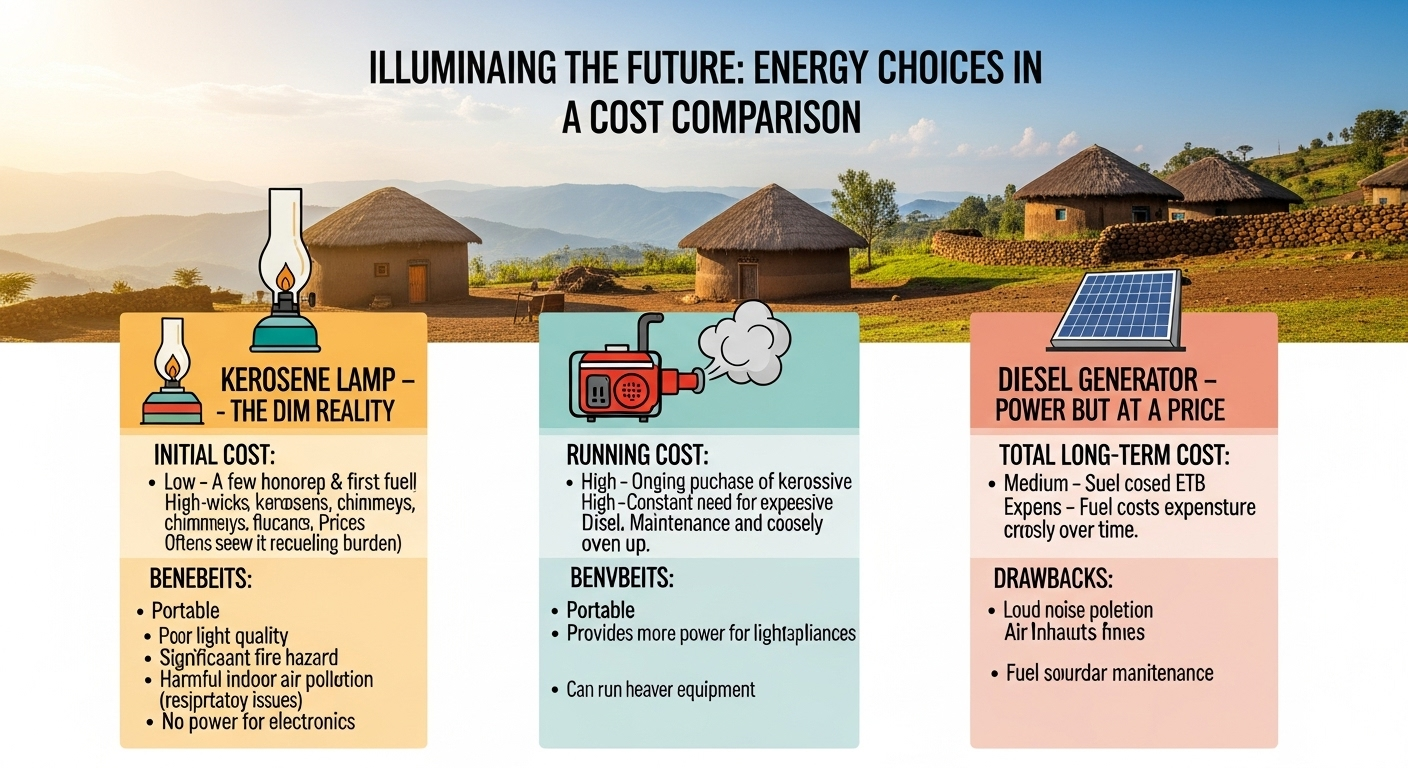
Kerosene lamps are cheap at first. But they cost more over time and cause health problems. Diesel generators give steady power. Fuel and maintenance costs are high. Grid electricity is cheaper per unit where it is available.
Many villages in Ethiopia still do not have grid access. Solar has a higher starting cost. Over years it is cheaper, safer, and cleaner than kerosene or diesel.
How to Calculate What You Need & Estimate Your Cost
- Step 1: List what you will run. Count lights, TV, radio, and how many hours each day.
- Step 2: Add wattage. Example: 4 bulbs (10W each) + 1 TV (60W) = 100W.
- Step 3: Multiply by hours. If 100W is used for 5 hours, that is 500Wh per day.
- Step 4: Size the battery. A 12V 50Ah battery stores about 600Wh. That can cover the above use.
- Step 5: Pick inverter size. A 200W off-grid system cost in Ethiopia may suit this small load.
Rule of thumb: Load (W) × hours = Watt-hours. Watt-hours ÷ voltage = battery Ah needed.
Tips for Getting the Best Deals & Avoiding Pitfalls
Pick trusted brands with warranty. Check solar panel efficiency and battery life. Lithium batteries cost more but last longer than lead-acid. Do not buy very cheap systems with no service. They often fail in a short time. Compare local, imported, and assembled systems. Quality depends on supplier reputation.
Future Trends and Price Outlook in Ethiopia
Solar panel costs are dropping globally. Better efficiency panels and mass production push prices down. Battery tech is improving. Lithium battery prices are falling, life is rising.
Government targets influence cost. If Ethiopia supports local manufacturing, import costs drop. Subsidies and renewable energy policy can make solar more affordable. Market growth may attract more suppliers, driving competition.
Solar Home System Installation Steps
-
Site check
Pick a sunny place on the roof or ground.
Make sure there is no shade during the day. -
Panel mounting
Fix the panels on a frame.
Set the tilt angle to face the sun. -
Wiring panels
Connect the panels to the charge controller.
Use proper cables and connectors. -
Battery setup
Place the battery in a cool and ventilated space.
Connect it to the charge controller. -
Inverter connection
Link the inverter with the battery.
This converts DC to AC for home use. -
Load connection
Connect lights, sockets, and appliances to the inverter output.
Keep wiring simple and safe. -
Testing
Turn on the system.
Check charging, battery status, and load supply. -
Safety check
Inspect fuses, grounding, and all connections.
Confirm everything is secure before daily use.
Conclusion
Typical solar home systems cost differ by size, brand, battery type, and place. Small systems (50-200W) are more affordable; large systems (1kW+) cost more upfront but give long-term savings. Major cost drivers are import duties, transport, battery type, and quality of components. Users should think through their load needs, warranty, and service support.
FAQ (Frequently Asked Questions)
What is the price of a 100W solar home system in Ethiopia?
It costs mid-range. It can run lights, a TV, and small devices.
How much does a full home solar system cost in Addis Ababa?
A 1kW+ system is higher priced. It covers full household needs with installation.
Is lithium battery SHS more expensive than lead-acid?
Yes. Lithium costs more but lasts longer than lead-acid.
Are there subsidies for solar home systems in Ethiopia?
Yes, some programs reduce cost. Rural families benefit most.
How does solar compare to kerosene or diesel?
Solar costs more upfront. But it is cheaper and safer long-term.
What is the lifespan of solar components in Ethiopia?
Panels last 20–25 years. Batteries last 3–10 years depending on type.
Can I buy solar through PAYGO or loans?
Yes. Many suppliers offer PAYGO and microfinance.