
Introduction
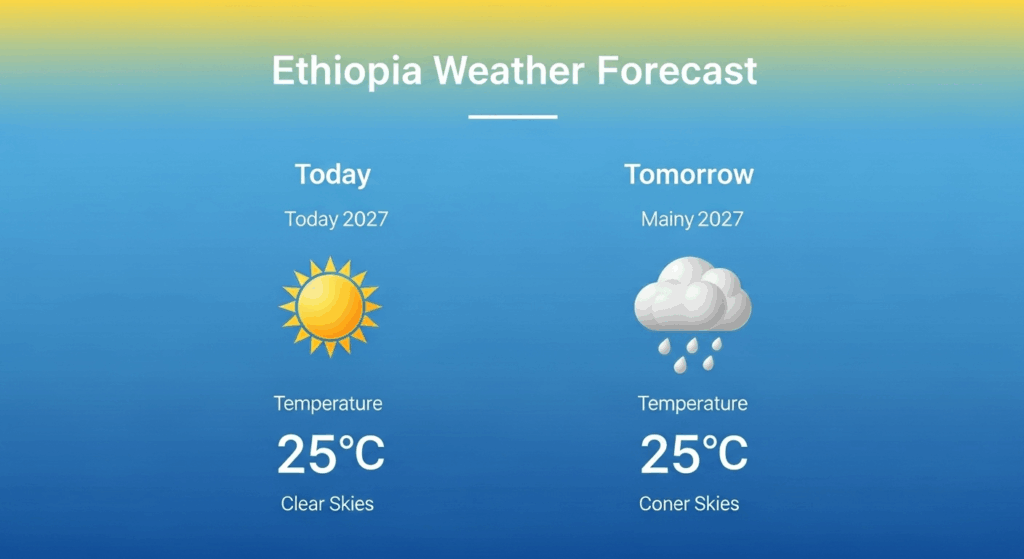
Let’s take a quick look at the weather tomorrow in Ethiopia and cities in Ethiopia. This forecast gives you about every things temperature changes to possible rain. Whether you live in the city or countryside, knowing Ethiopia weather forecast tomorrow helps you for plan your day better.
How Forecasts for Ethiopia Are Generated
The Ethiopian weather forecast tomorrow comes from a mix small cities to capitals. Meteorologists use satellite images, radar scans, and ground-station readings to track all changes in the atmosphere and air. The Ethiopian Meteorological Institute (EMI) collects all this data and creates national forecasts and publish for all.
They use weather models, climate data for Ethiopia, and regional updates to predict temperature, rain, and wind. EMI also shares Agromet forecasts to be useful for farmers and their work. By combining global and local information, the institute makes sure the forecast for Ethiopia is highly accurate as possible.
Tomorrow’s Forecast: Key Parameters (City / Region-Level)
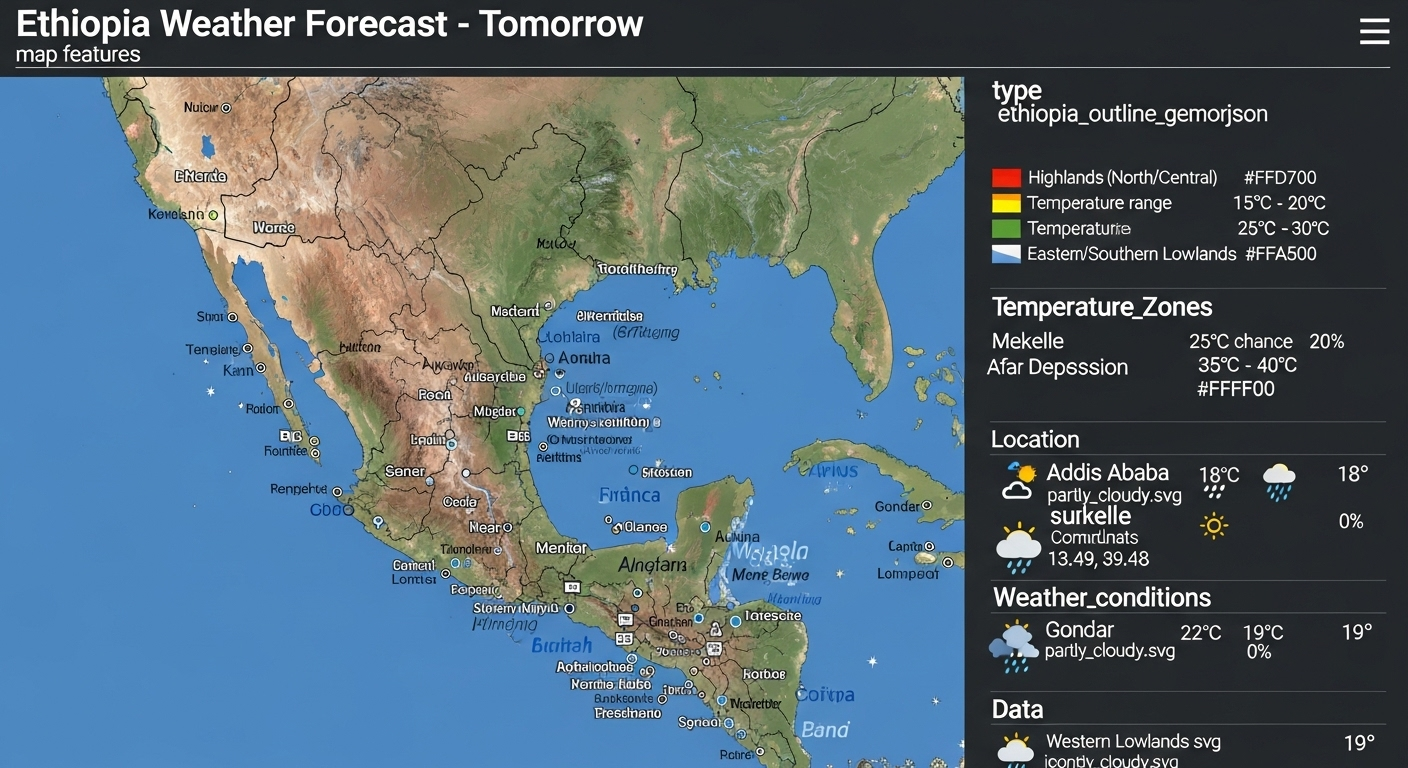
Here’s what to expect from Ethiopian weather tomorrow, based on the latest reports. Conditions may vary slightly by region.
Temperature: Highs, Lows & Feels Like
It may feel a bit cooler in the morning, when sky stay cloudy. In highland areas, mornings start chilly, but afternoons warm up very quickly. In lowland regions, temperatures can raised up to 28–30°C during the day. Nights stay warmer, giving a mild, comfortable feel. Humidity and wind also affect how hot or cold it feels that’s the “feels like” temperature you see in forecasts report.
Precipitation & Rain / Storm Chances
There’s a moderate rain chance in parts of Ethiopia tomorrow. Some areas may see light showers or short bursts of rain in the afternoon. The average precipitation probability stays around 40–60%. That means rain is likely in a few regions, especially near the highlands.
Expect around 2 to 5 mm of rainfall in places where clouds gather more. A few areas might have some drizzle early in the morning. Thunderstorm risk remains low but can’t be ruled out in humid zones. Overall, it looks like a partly wet weather tomorrow in Ethiopia, with local rain spots here and there.
Humidity, Dew Point & Comfort Index
By afternoon, the air will turn drier with lower dew point levels. Most people will feel a fair comfort level throughout the day. There won’t be any heavy mugginess, unless light rain passes through. This gives a balanced outlook for humidity tomorrow in Ethiopia.
Cloud Cover, Sunshine & UV Index
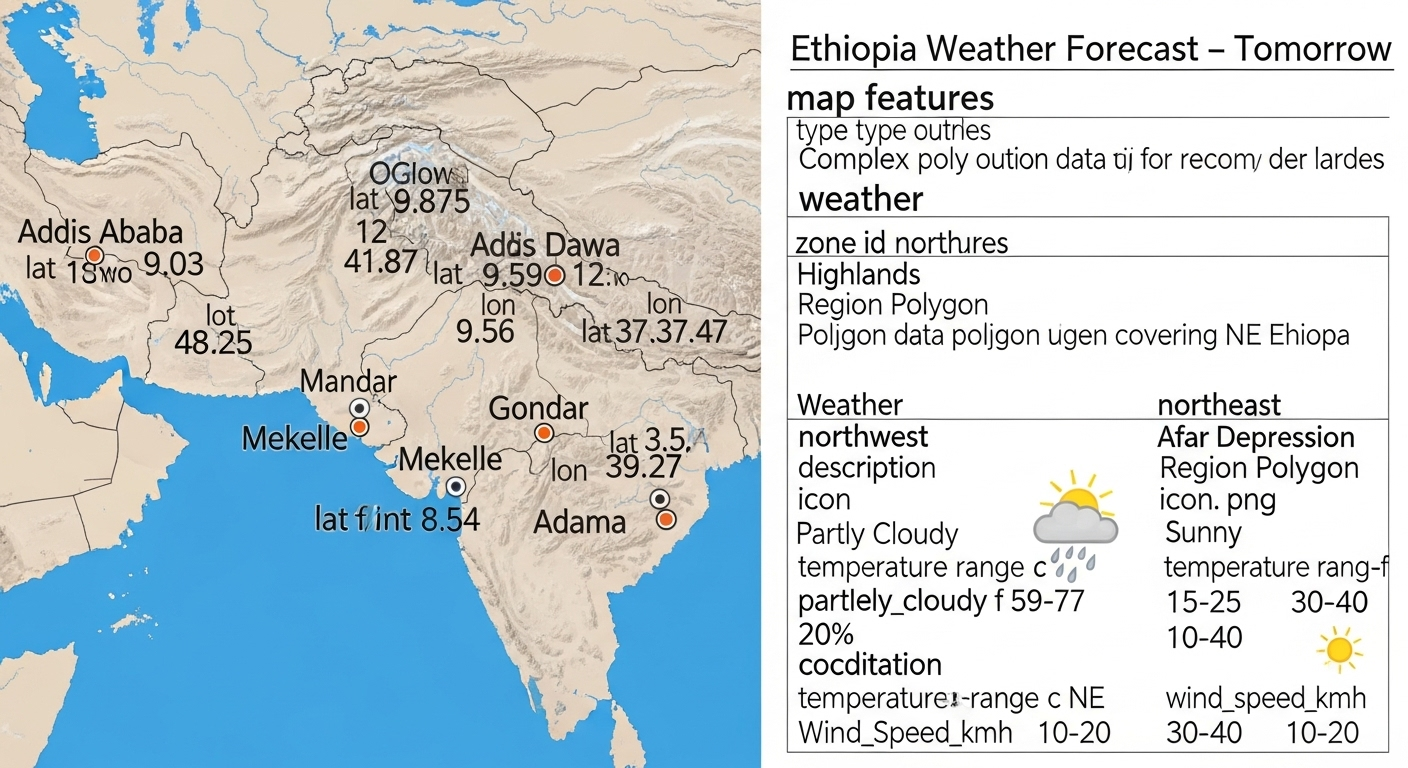
Cloud cover will be mixed tomorrow. Some places may stay partly cloudy, while others see a few sunny breaks. Expect around 5–7 sunlight hours in central regions. The UV index tomorrow could reach moderate levels in the afternoon.
Hourly Breakdown (Morning → Evening → Night)
Here’s a simple time-based view of the hourly weather Ethiopia for tomorrow.
06:00–09:00 (Morning):
Cool start with light clouds. Small chance of drizzle in the highlands.
12:00–15:00 (Afternoon):
Warmer hours of the day. Some areas may see passing showers.
16:00–19:00 (Evening):
Clouds increase again. Rain chances rise slightly before sunset.
20:00–23:00 (Night):
Mostly dry with calm air. Cool and comfortable temperatures expected.
Regional & Elevation Differences in Ethiopia’s Weather
Ethiopia’s weather tomorrow changes a lot from place to place. The land has mountains, valleys, and low plains each with its own feel. Because of that, every region gets its own type of forecast.
Highlands (Addis Ababa, Bale, Simien)
The highlands stay cool and fresh. Tomorrow, places like Addis Ababa, Bale, and Simien will likely have mild air and a few clouds. The highland weather tomorrow may bring light rain or mist. Daytime feels pleasant, but nights turn cold fast.
Pack a jacket if you go out early or late. That’s the charm of the upland climate calm mornings and crisp evenings.
Lowlands & Eastern Plains
The lowlands are the hottest part of Ethiopia. In areas like Danakil, Ogaden, and Somali lowlands, tomorrow will be dry and sunny. Expect hot lowland weather with little to no rain. The air feels heavy during midday, and shade will be your best friend.
Western & Southwestern Rainier Regions
The southwestern and western regions stay wet and green. Places like Gambella and Benishangul-Gumuz often see rain and clouds. Tomorrow’s wet forecast in southwest Ethiopia may bring short but heavy showers.
What to Expect & Preparations for Tomorrow
Weather can shift fast in Ethiopia. A little planning makes your day easier.
For Travelers & Tourists
If you’re live in the highlands, bring a light jacket and umbrella. Heading to the lowlands? You’ll need sunscreen, a hat, and airy clothes for safety.
Check the travel weather for Ethiopia before you leave your hotel. If rain is likely, carry a small bag cover and wear waterproof shoes. Simple rainy day tips can save your trips and travel.
For Locals, Commuters & Farmers
For commuters, light rain may slow morning travel. Leave early and stay cautious on slippery roads. For farmers, the Ethiopia farmers’ forecast is key. Rain or heat can be affect our planting, watering, or harvest the work.
Safety & Health Alerts
Some days bring risks. Watch for storm alerts, heavy rain, or heat warnings must. In the highlands, heavy rain can cause floods or landslides. In the lowlands, the main concern is heat stress.
Climate Context & Seasonal Patterns
To understand Ethiopia’s weather tomorrow, it helps to look at the big pattern. The country’s climate follows long-term patterns that shape what we feel day to day and tomorrow.
Ethiopia’s Climate Zones & Seasonal Definitions
Ethiopia has the five main climate zones, known as Bereha, Kolla, Weyna Dega, Dega, and Wurch. Each zone has their own temperature and rainfall range.
-
Bereha is hot and dry, found in lowland and desert areas.
-
Kolla is warm, with moderate heat and less rain.
-
Weyna Dega covers middle elevations, where most people live, with mild days and cool nights.
-
Dega includes the highlands, where the air is cooler and rain is more frequent.
-
Wurch is the cold zone, found on the highest mountains.
Tomorrow’s forecast links closely with these zones. For example, cooler Dega and Wurch areas may see clouds or showers, while Bereha regions stay hot and clear.
Ethiopia also has three main weather seasons: Bega, Belg, and Kiremt.
These seasons help explain what’s normal for this time of year.
-
Bega (October to February) is mostly dry and sunny.
-
Belg (March to May) brings short rains and mild warmth.
-
Kiremt (June to September) is the main rainy season, with heavy rainfall in many areas.
So when you want to know about tomorrow’s weather forecast in Ethiopia, it’s good to know which season we’re in it helps you to know the changes of weather always.
How Tomorrow’s Forecast Compares to Seasonal Averages
Meteorologists track all seasonal average rainfall in Ethiopia and normal temperatures for every zone.
These numbers show what’s typical for the month. If tomorrow’s temperatures are above those averages, this is called a climate anomaly.
For example, if Addis Ababa usually gets 3 mm of rain running week but tomorrow expects 8 mm rain, that means unusual-than-normal weather. In the lowlands, temperatures may rise up then seasons, showing more hot days than usual.
In the southwest, rainfall could match the average Kiremt pattern, meaning consistent daily showers. This kind of comparison helps people plan better farmers, travelers, and locals all rely on it to understand what’s “normal” and what’s not.
Forecast Reliability & Tips on Checking Updates
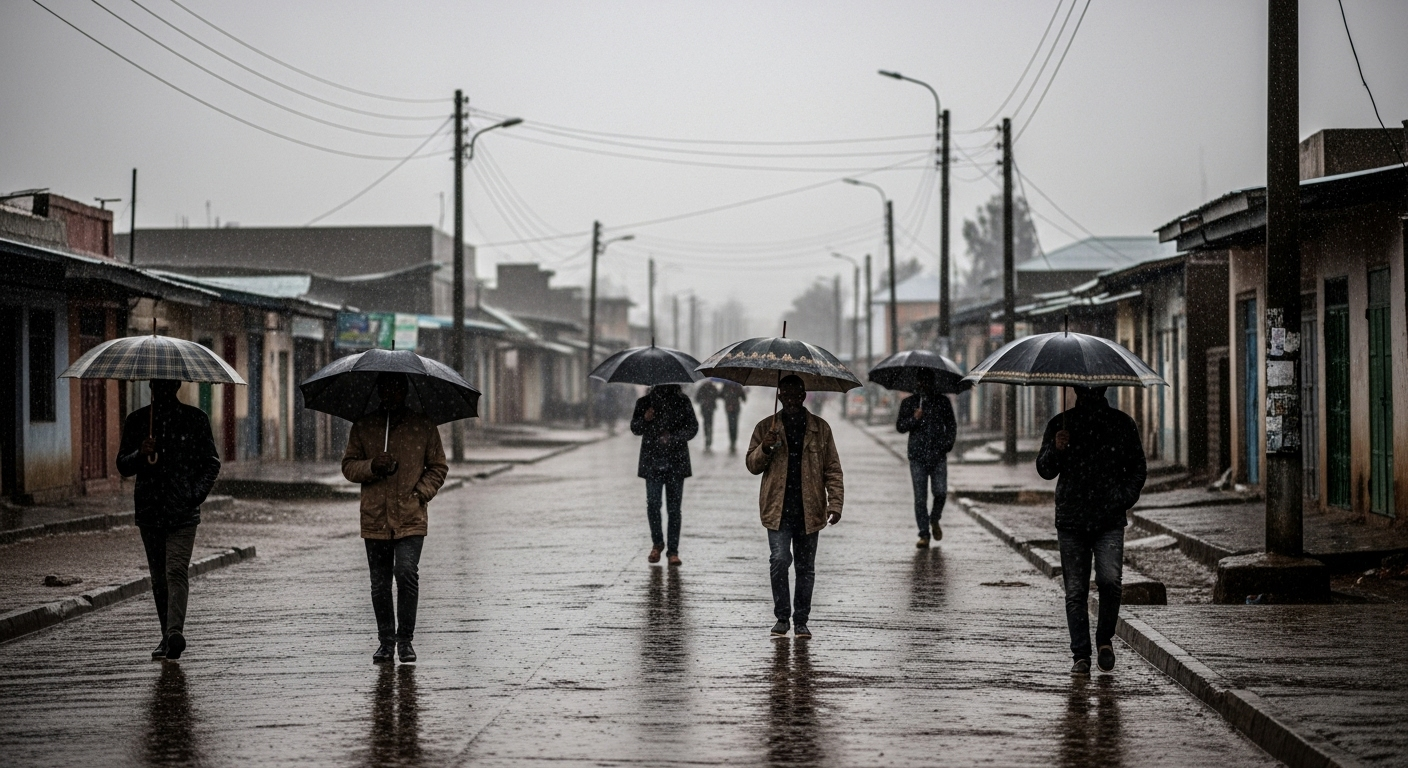
Weather forecasts are useful, but they’re never perfectly shown. Ethiopia’s mountains, valleys, and microclimates make local forecasts that is change so fast. Small model errors or shifting winds can affect results. That’s part of weather model uncertainty, which will be common everywhere.
For the most accurate forecast updates, check more than one sources. Trusted sources include the Ethiopian Meteorological Institute (EMI), BBC Weather, and global weather models like ECMWF or GFS. The best time to check updates is early in the morning and again see in the evening.
FAQs
Will it rain tomorrow in Ethiopia?
Rain chances depend on the place where you are now. In the southwest and western regions, the chance of rain tomorrow in Ethiopia is higher. The highlands may get a few showers, while lowland zones like Danakil or Somali regions stay normally dry.
What are the temperature extremes for tomorrow in Ethiopia?
Always check weather update and you can check in here also
How reliable is the weather forecast for Ethiopia?
Forecasts in Ethiopia are fairly reliable, especially for 24-hour updates. But mountain areas and valleys can shift quickly because of local air patterns. That’s normal forecast reliability in Ethiopia small model errors can change local results.
Which sources give the best updated weather forecast for Ethiopia?
Trusted sources include the Ethiopian Meteorological Institute (EMI), Meteoblue, Timeanddate, and Weather.com Ethiopia forecast. These services post real-time forecast updates with local areas data.
How does Ethiopia’s elevation affect tomorrow’s weather?
Elevation plays a big role in the weather tomorrow in Ethiopia. The highlands like Addis Ababa or Bale are cooler with a higher chance of rain. The lowlands are more hot, dry, and sunny through all of the day.
What should I wear tomorrow across different regions in Ethiopia?
Clothing depends on where you living. In the highlands, wear a light jacket, long sleeves, and closed shoes for the cooler air. In lowland areas, go for light, breathable clothes and use sunscreen.